
After hours of travelling through lagoons and canals, the water ahead suddenly turns a paler, brighter blue. The mangroves open. A low bridge crosses the channel, and beyond it you can hear the sea. This is Boca Paila, the mouth where the lagoon system of Sian Ka’an finally meets the Caribbean.
For the ancient Maya, this was the gate between the ocean and the interior. For us today, it is the turning point of the Ancient Canal Tour and one of the places where the reserve shows its full scale.
Where Fresh Water Meets the Sea
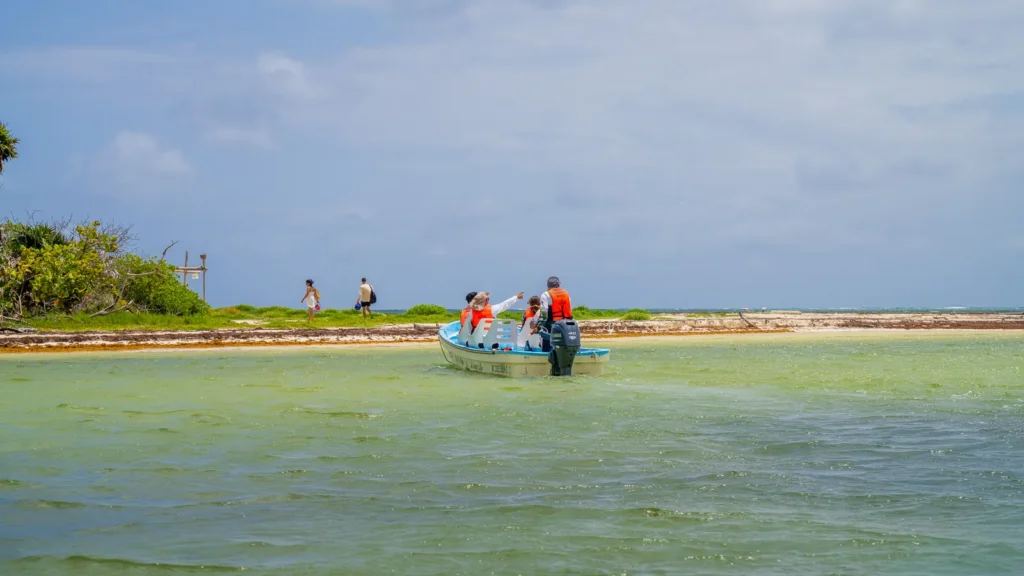
Sian Ka’an is a mosaic of ecosystems: tropical forest, savanna, freshwater wetlands, mangroves, lagoons, a coastal dune and a coral reef. Boca Paila is where several of them touch. Water flows out of the lagoons and mixes with the sea, creating brackish shallows where fish breed and birds feed.
That mixing is why the colours change so dramatically here: deep green over the seagrass, pale turquoise over the sandbars, and dark blue where the channel runs deeper. It is also why we move slowly. The sandbars shift with tides and wind, and our captains read the water as they go.
The Bridge and the Sandbars
The bridge at Boca Paila carries the coastal road over the lagoon outlet. Passing beneath it by boat is a small adventure, and on calm days you can stop on a shallow sandbar to stretch your legs. When the weather allows, there is time for a swim.
Conditions change quickly on the coast. When the wind picks up or the water is rough, our captains decide where to stop based on safety, not schedule. That flexibility is part of the reason we can offer this experience year-round.
What You Might See
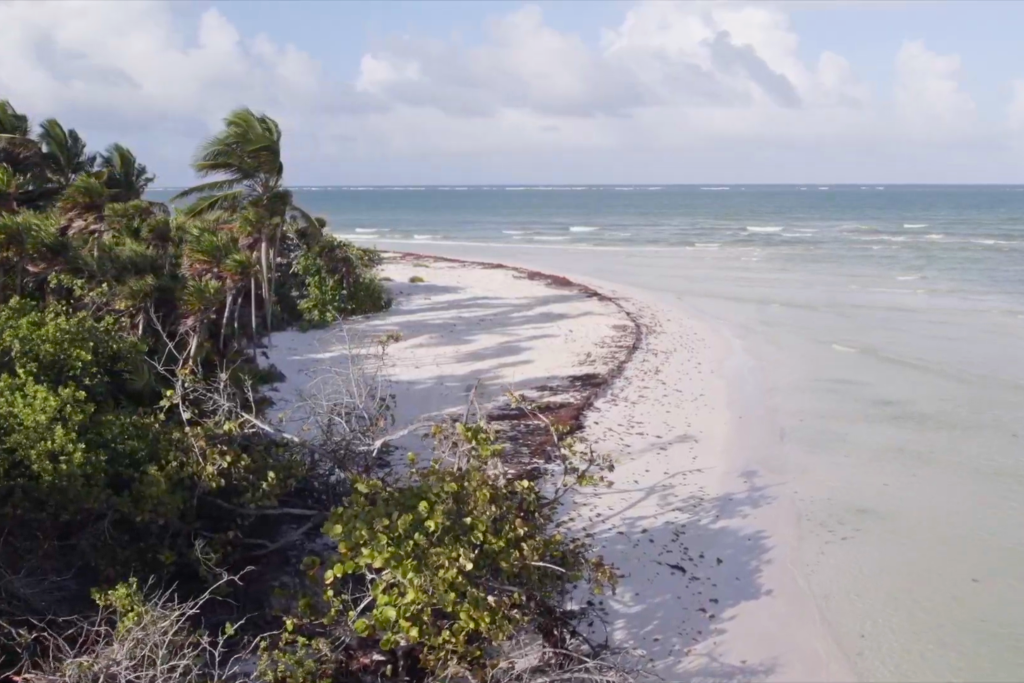
Boca Paila is a feeding area, so wildlife is often active here. Visitors regularly spot:
- Brown pelicans and cormorants resting on the mangroves.
- Magnificent frigatebirds gliding high above the channel.
- Herons and egrets fishing in the shallows.
- Schools of small fish in the clear water near the sandbars.
On the way to Boca Paila the route crosses Capelchén Lagoon, where we turn off the engine to look for manatees and crocodiles. As always in a wild place, sightings are possible but never guaranteed. Read more in our guide to the wildlife of Sian Ka’an.
How to Get to Boca Paila
You can reach Boca Paila by the coastal road, but it is a long, rough drive and you will only see it from the bridge. The best way to experience it is from the water, following the same route the Maya used.
On the full-day Ancient Canal Tour in Sian Ka’an we leave from our palapa in Muyil, cross the Muyil and Chunyaxché lagoons, stop at the Maya temple of Xlapak, float the 950-metre canal, continue through Capelchén Lagoon and reach Boca Paila before returning for a traditional Maya meal. The Early departure includes pickup in Tulum; the Midday departure includes pickup along the corridor from Playa del Carmen to Tulum.
Planning your days on the coast? Our honest guide to how to get to Sian Ka’an explains every route.
Meet the Maya Cooperative Behind Your Visit
Frequently Asked Questions
Can you swim at Boca Paila?
On the Ancient Canal Tour there is a swim stop near Boca Paila when the weather allows. Our captains decide on the day based on wind, waves and safety.
How far is Boca Paila from Tulum?
Boca Paila is inside the Sian Ka’an Biosphere Reserve, south of Tulum. By boat from our palapa in Muyil it is the farthest point of the Ancient Canal route.
Do I need a permit to visit Boca Paila?
Entry to the reserve requires the federal CONANP access fee of approximately $225 MXN per person, subject to change, paid at our palapa and not included in tour prices.
Questions? Contact us at reservacionesctsk@siankaantours.com.mx or WhatsApp +52 984 114 0750