
Of all the birds you might see in Sian Ka’an, the brown pelican is one of the most patient models. It sits on top of a mangrove, neck folded, long bill resting on its chest, and lets the boat drift by. Then, suddenly, it takes off, circles, and plunges headfirst into the lagoon.
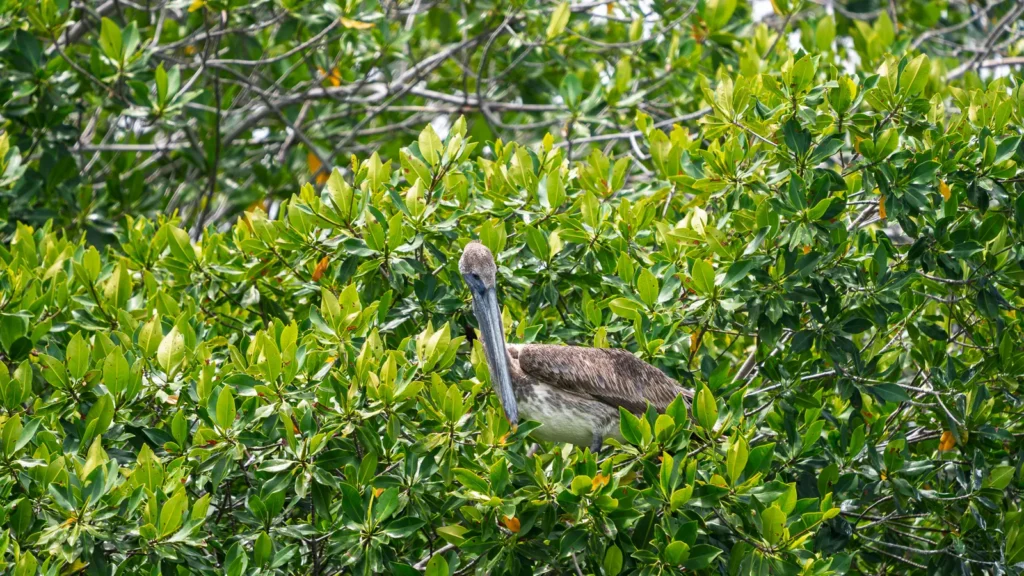
How to Recognise a Brown Pelican
- A large, heavy bird with a long bill and a stretchy throat pouch.
- Grey-brown body; adults have a pale yellowish head and, in breeding season, a dark chestnut back of the neck.
- Young birds are browner all over.
- In flight, it moves with slow, deep wingbeats and often glides low over the water in lines.
The Plunge Dive
The brown pelican is one of the very few pelicans that dive from the air to catch fish. It spots a school from above, folds its wings and drops into the water bill-first. Air sacs under its skin help cushion the impact and bring it back to the surface. Its pouch expands to scoop up water and fish; it drains the water, then swallows.
Watching a group of pelicans dive one after another is one of the great free shows of the Caribbean coast.
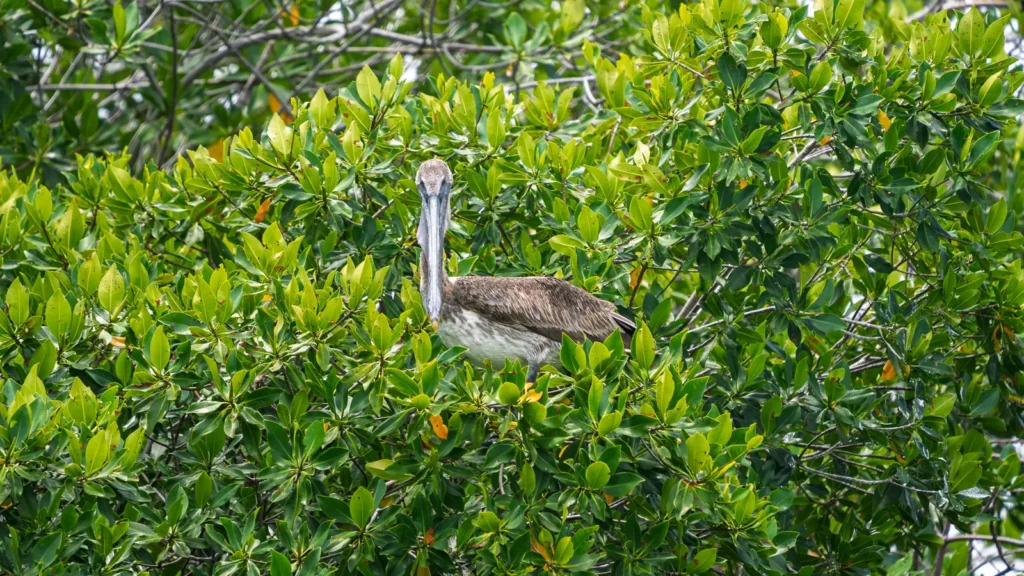
Where Pelicans Rest in Sian Ka’an
Pelicans spend a lot of time resting, preening and drying in the sun. In Sian Ka’an they choose the tops of mangroves near open water, where they can see fish and escape disturbance. On the Ancient Canal Tour you often see them on the lagoons near Boca Paila and along the mangrove islands.
Mangroves are essential for them: they provide resting places and shelter the young fish that pelicans eat. Read about these trees in our guide to the mangroves of the Riviera Maya.
How to Watch Without Disturbing
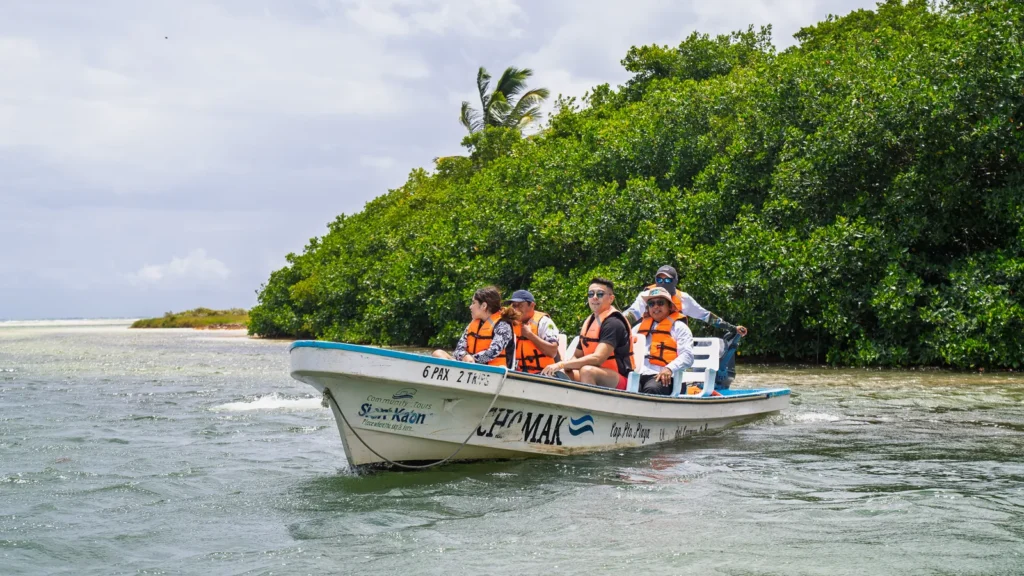
A pelican that flies off because a boat came too close has wasted energy it needs to fish. Our captains slow down and keep a respectful distance. You can help too:
- Stay seated and quiet when the boat approaches resting birds.
- Use a zoom lens rather than asking to get closer.
- Never throw food to pelicans or other birds.
- Avoid sudden movements and loud noises.
More Than a Postcard
Pelicans are also indicators of the health of the coast. They depend on abundant fish, which depend on clean water and healthy mangroves. When you see pelicans resting peacefully in Sian Ka’an, you are seeing an ecosystem that still works.
Join us on the Ancient Canal Tour in Sian Ka’an to see them from the water, or start your morning with the jungle birds on our Bird Watching & Mayan Herbal Medicine walk.
Meet the Maya Cooperative Behind Your Visit
Frequently Asked Questions
Where can I see brown pelicans near Tulum?
On the lagoons and mangroves of Sian Ka’an, especially near the coast at Boca Paila, which is part of the Ancient Canal Tour.
How do brown pelicans catch fish?
They spot fish from the air, fold their wings and dive headfirst into the water, scooping the fish with their stretchy throat pouch.
Is it safe to approach pelicans?
It is best not to. Keeping a respectful distance avoids stress and helps the birds save energy for fishing.
Questions? Contact us at reservacionesctsk@siankaantours.com.mx or WhatsApp +52 984 114 0750