
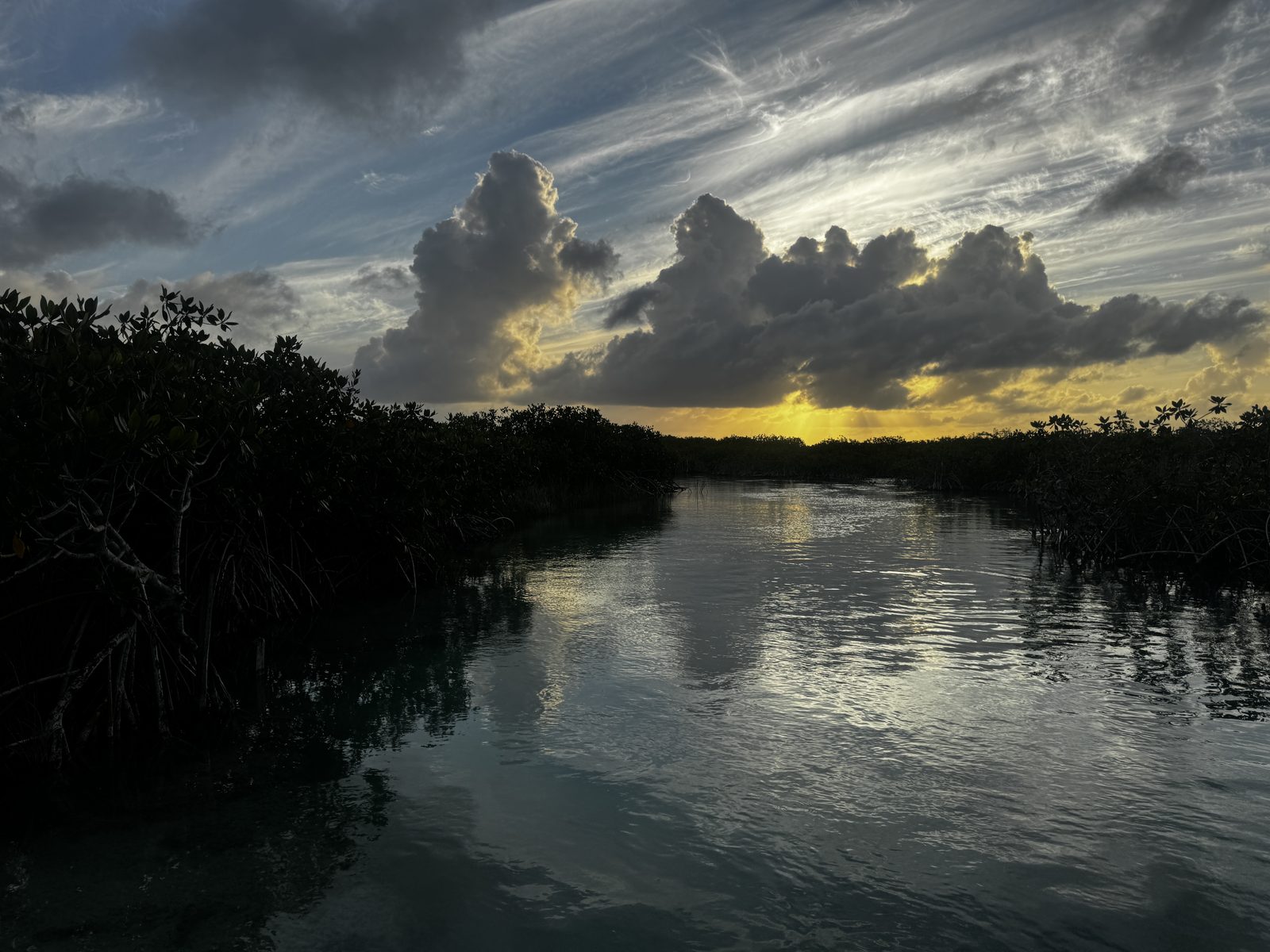
The four species of mangrove lining the channels of Sian Ka’an are the least photogenic and most important organisms on this coast. They are why the water is clear, why the reef survives storms, why the fish exist and — very literally — why the Riviera Maya has a coastline at all.
The Four Trees
Red mangrove (Rhizophora mangle) — the one with stilt roots arching into the water, closest to the sea. Its tangle is the nursery.
Black mangrove (Avicennia germinans) — sends up thousands of pencil-like snorkels (pneumatophores) through the mud to breathe.
White mangrove (Laguncularia racemosa) — further inland, excretes salt through glands on its leaves.
Buttonwood (Conocarpus erectus) — the transition species at the dry edge.
They arrange themselves in bands by salt tolerance, which is why the channel looks different every hundred metres.
How They Do the Impossible
Mangroves live where nothing else can: salt water, no oxygen in the mud, tides twice a day. Red mangroves block salt at the root like a reverse-osmosis filter. Black mangroves push it out through their leaves. Both breathe through aerial roots because the sediment is anoxic. And several are viviparous — the seed germinates while still attached to the parent, drops as a living dart, and floats until it finds ground.
Four Jobs They Do for You
1. They make the water clear. Roots trap sediment and filter runoff, which is why the lagoons are turquoise and why the reef beyond them gets clean water.
2. They break hurricanes. A healthy mangrove belt absorbs storm surge and wind energy; where it has been cleared for development, the sea takes the beach and then the buildings.
3. They are the nursery. Most commercially important reef fish spend their juvenile stage among mangrove roots. No mangroves, no fish, no fishing communities.
4. They store carbon. Mangrove peat holds several times more carbon per hectare than tropical rainforest — and releases it when drained.
Why Sian Ka’an Matters So Much
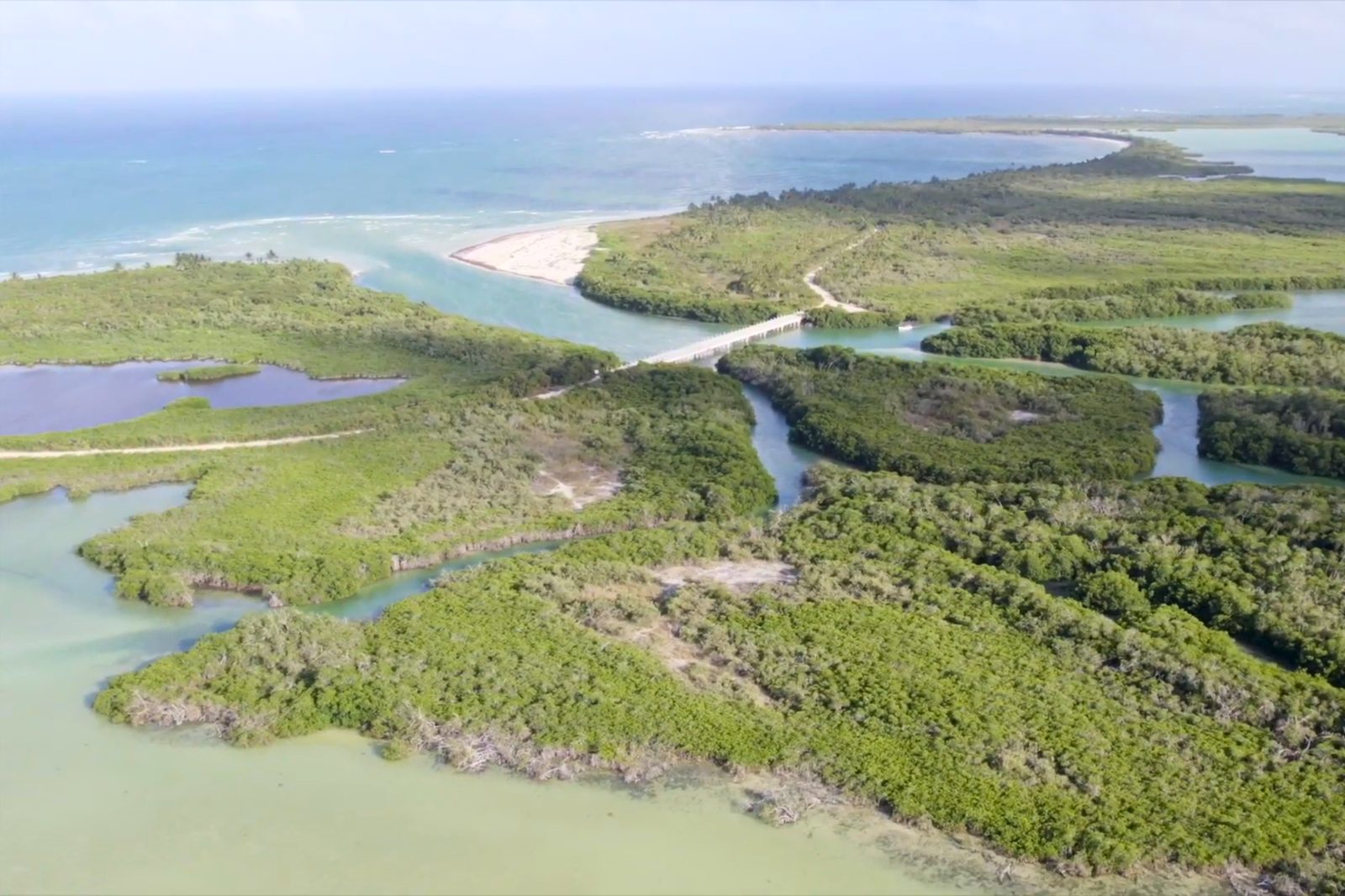
Mexico holds some of the largest mangrove extensions in the Americas, and this reserve protects a vast, continuous, connected stretch of them — forest to lagoon to bay to reef. Continuity is the point: fragmented mangrove does a fraction of the work. Every metre you float on the Ancient Canal tour passes through this machinery.
What Threatens Them
Coastal development and fill, altered water flow from roads and canals, pollution, and the slow squeeze of sea level rise against hard infrastructure behind them. In Mexico mangroves are legally protected — enforcement is the hard part, and reserves like this one are where the law actually holds.
What You Can Do in a Morning
Use biodegradable sunscreen or none. Take everything out with you. Choose small-boat operators who keep to marked channels — propellers scar root systems. And visit: funded protected areas survive, unfunded ones become resorts.
Meet the Community Behind the Tour
In just two minutes, discover who we are — the Maya families and cooperative members who make every experience authentic and regenerative:
Frequently Asked Questions
Why are mangroves important?
They filter water, buffer hurricanes and erosion, serve as nursery habitat for most reef fish and store more carbon per hectare than rainforest.
How many mangrove species are in the Riviera Maya?
Four: red, black and white mangrove plus buttonwood, arranged in bands according to salt tolerance and water depth.
Can you visit the mangroves in Sian Ka’an?
Yes — the boat crossings and the ancient canal float pass directly through mangrove channels, with local guides who explain the system as you go.
Float Through the Machinery That Keeps This Coast Alive
Book your Ancient Canal experience and see the mangroves from the inside, with the community that protects them.
Questions? Contact us at reservacionesctsk@siankaantours.com.mx or WhatsApp +52 984 114 0750