
You searched for eco tours. Good — that instinct is right. But the word “eco” now sits on everything from solar-powered lodges to theme parks with a thousand parking spaces, and it is worth knowing what separates ecotourism from what came after it: regenerative tourism. This is the plain-language version, written by a Maya cooperative that practises the second while people search for the first.
The Short Answer
Ecotourism asks: does this trip harm nature as little as possible?
Regenerative tourism asks: is this place — its ecosystem, its economy and its culture — measurably better because visitors came?
The first aims for zero. The second aims for positive. Every regenerative experience is ecological; not every eco experience is regenerative.
Where Ecotourism Came From
The term was coined in the 1980s to describe low-impact travel in natural areas, and it changed the industry for the better: smaller groups, trained naturalist guides, protected areas funded by visitors. Mexico built real conservation on that idea — including the reserve we work in, described in our Sian Ka’an visitor guide.
Where It Ran Out of Road
Two problems. First, “eco” was never certified by anyone, so it became a font choice — a green leaf on a brochure. Second, even done honestly, ecotourism sets its ceiling at do no harm. For a bleached reef, a thinned forest or a village whose young people are leaving, doing no harm is not enough. You cannot restore something by leaving it exactly as damaged as you found it.
What Regeneration Adds
Community ownership, not just employment. The people of the place decide, and the profit stays.
Measurable improvement. Reef recovery, species monitoring, wastewater treated instead of dumped, waste composted instead of buried.
Culture transmitted, not performed. Your guide explains the lagoon in words learned from his grandfather, not from a script.
The visitor leaves changed. You arrive a tourist and leave an ally. That is a measurable outcome too.
Why We Still Say “Ecotourism”
Because that is the word travellers type into Google. We are not going to hide behind vocabulary while people search for the right thing with the old name. Call it eco, call it sustainable, call it regenerative — then ask the operator the three questions below and the label stops mattering.
The Three Questions That Cut Through Everything
1. Who owns this operation? Local and Indigenous ownership, or a company that employs locals seasonally?
2. Where does my money go? A real operator answers in one sentence.
3. Who verified your claims? An independent, audited certification — or the marketing department?
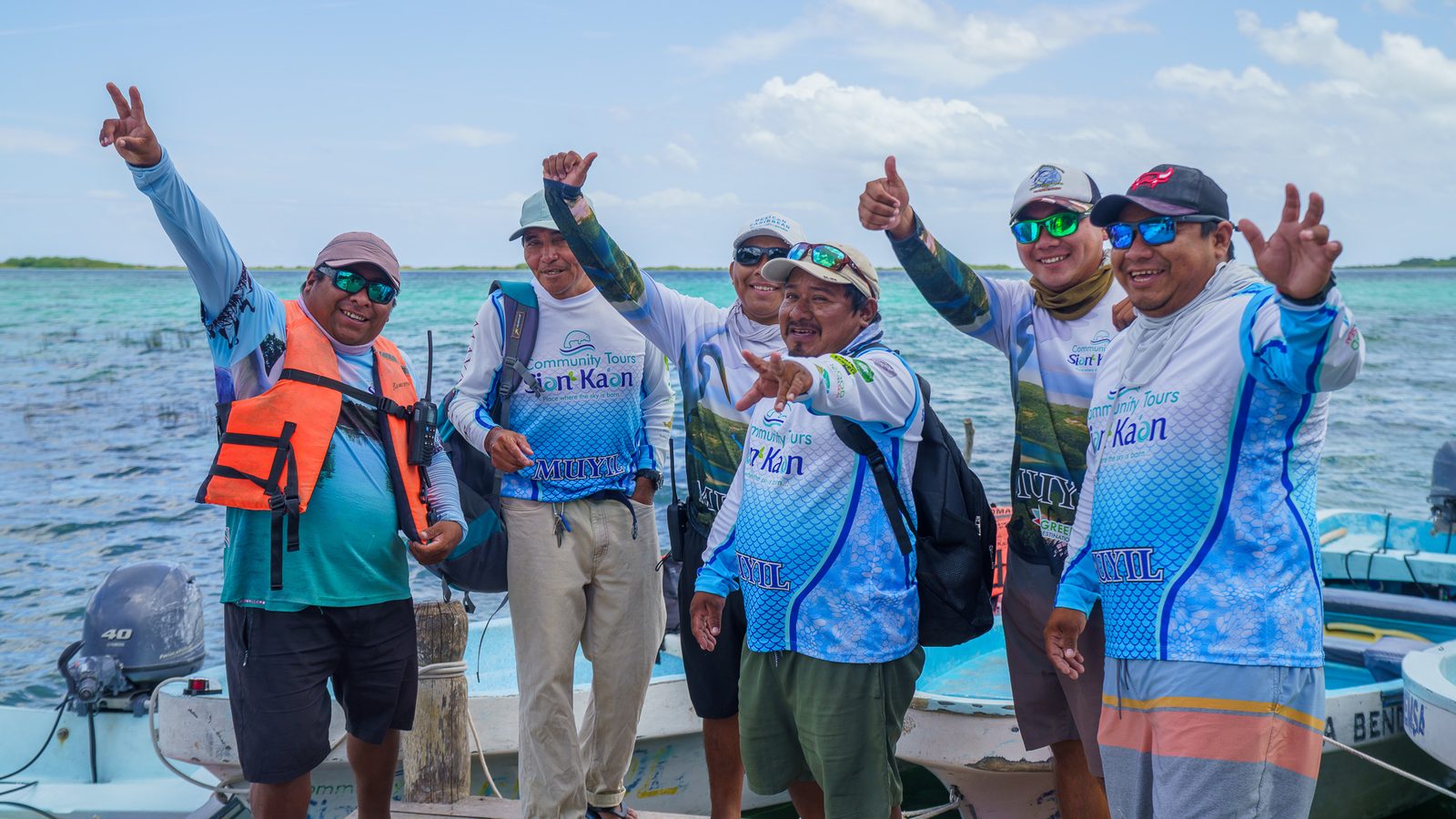
Our answers: a 100+ family Maya cooperative; guides, cooks, boat captains and reserve conservation; and the Good Travel Seal, an audited certification based on GSTC criteria. That third one is the hardest to fake, which is exactly why we did it.

What This Looks Like on a Tuesday
Small groups within the carrying capacity agreed with CONANP. Wastewater treated on site through filtration and plants until it is irrigation quality. Organics composted, recyclables separated, single-use avoided at the source. Wildlife observed and never fed — the rules behind every sighting in our wildlife guide. And a federal entry fee that goes straight to protecting the reserve. Not slogans: operations.
Meet the Community Behind the Tour
In just two minutes, discover who we are — the Maya families and cooperative members who make every experience authentic and regenerative:
Frequently Asked Questions
What is the difference between ecotourism and regenerative tourism?
Ecotourism minimises harm in natural areas. Regenerative tourism goes further: the local community leads and benefits, and the destination is measurably better off because visitors came.
Is sustainable tourism the same as regenerative tourism?
No. Sustainable aims to sustain — to take no more than a place can give, a net-zero goal. Regenerative aims for net positive: healthier ecosystems, stronger local economies, culture passed on.
How can I tell if an eco tour is greenwashing?
Ask who owns it, where the money goes and who verified the claims. Vague answers about “giving back” with no independent certification are the tell.
Is regenerative tourism more expensive?
Usually not. Community-run experiences in the Riviera Maya are priced like conventional tours — the difference is where the money lands, not how much of it there is.
Try the Difference for One Day
You do not have to redesign your holiday — just give one day of it to an experience owned by the people of the place. Book your regenerative experience in Sian Ka’an directly with the Maya cooperative.
Questions? Contact us at reservacionesctsk@siankaantours.com.mx or WhatsApp +52 984 114 0750