
A green leaf on a brochure costs nothing. An audited certification costs money and time. Between those two extremes sits most of the “eco” tourism sold on this coast. Here are seven questions that expose greenwashing — use them on us, and on everyone else.
1. Who owns this operation?
Local or Indigenous ownership means decisions and profit stay in the territory. “We employ local people” is not the same thing — employment is wages; ownership is power. This is the core of Mexico’s community tourism decree.
2. Where exactly does my money go?
A real operator answers in one sentence with categories, not adjectives. We published ours. If the answer is “we give back to the community,” ask which community and how much.
3. Who verified your sustainability claims?
The single hardest question to fake. Independent, audited certifications — like the GSTC-based Good Travel Seal — require documentation and a third-party audit. Self-declared “eco” requires a logo designer.
4. How many people go per day?
Group size and daily volume tell you more about environmental impact than any mission statement. In a protected area, carrying capacity should be a legal limit, not a marketing preference.
5. What is your wildlife policy?
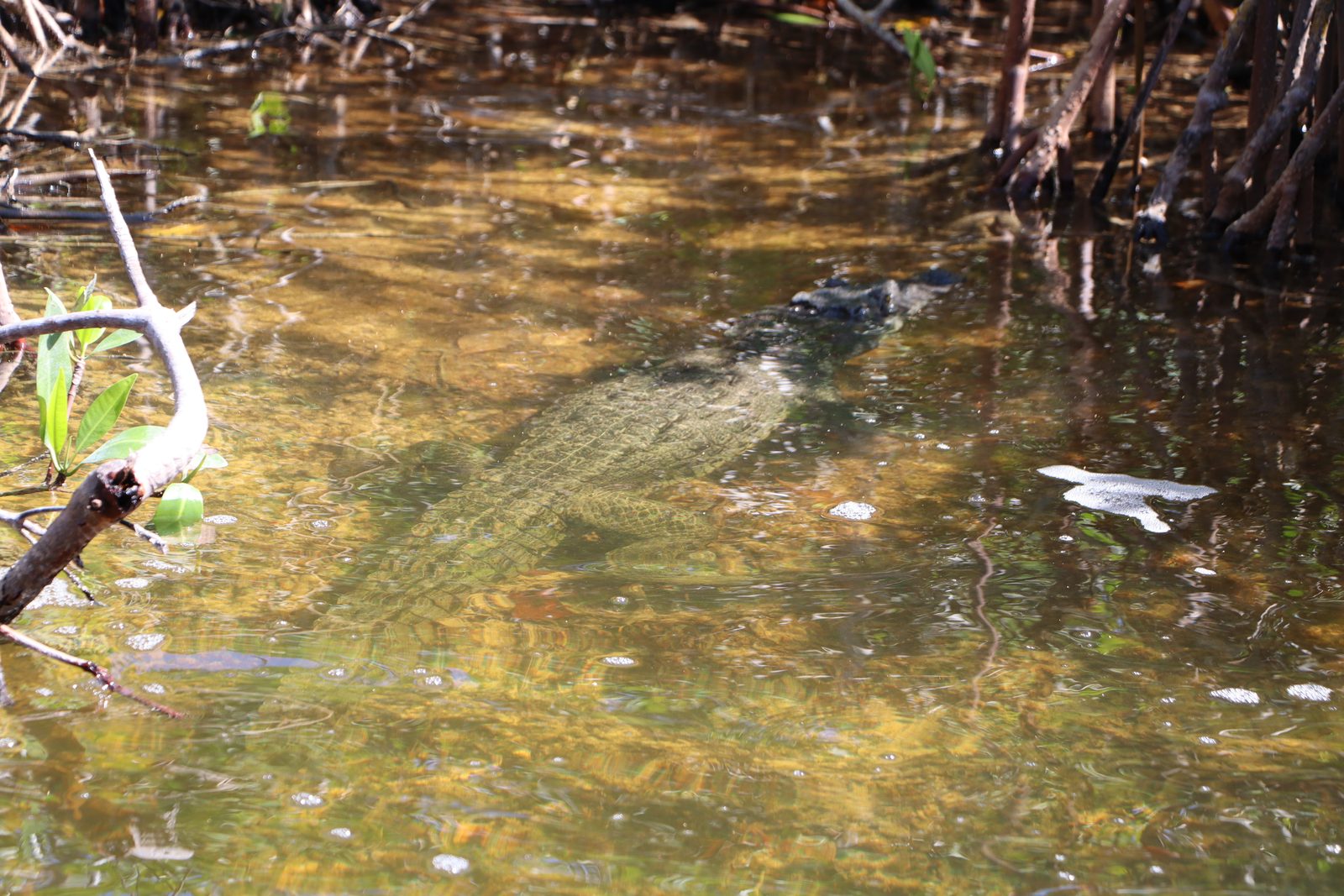
Ask specifically: do you feed, touch, or bait animals? Are there captive animals? Any operator offering guaranteed encounters with wild animals is either lying or manipulating the animals — see how we handle crocodile sightings.
6. What happens to your waste and wastewater?
Extremely revealing, because it is expensive and invisible to guests. Ask where the toilets drain and what happens to food scraps. Vague answers usually mean a septic pit and a bin bag.
7. What do you refuse to do?
The best answer any operator can give. Real limits — routes we do not run, animals we will not approach, group sizes we will not exceed — prove that sustainability has a cost. If a company has never turned down money for environmental reasons, it has not been tested.
The Shortcut
If you only have time for one question, use number three. Then read ecotourism vs regenerative tourism to understand what a good answer even sounds like.
Meet the Community Behind the Tour
In just two minutes, discover who we are — the Maya families and cooperative members who make every experience authentic and regenerative:
Frequently Asked Questions
How can I tell if a tour is really eco-friendly?
Ask who owns it, where the money goes and who independently verified the claims. Audited certifications are the strongest signal; self-declared labels mean very little.
What is greenwashing in tourism?
Marketing an experience as environmentally responsible without the practices or verification to support it — typically green branding, nature imagery and vague claims about supporting communities.
Are eco certifications trustworthy?
The credible ones involve third-party audits and periodic renewal against published criteria, such as GSTC-based standards. Certifications with no audit are just paid memberships.
Ask Us the Seven Questions
We answer all of them in writing. Then book your experience with the Maya cooperative.
Questions? Contact us at reservacionesctsk@siankaantours.com.mx or WhatsApp +52 984 114 0750