
Yes, there are crocodiles in Sian Ka’an. And yes, thousands of visitors float the ancient canal every year without incident. Both facts are true, and understanding why is the difference between fear and respect — which is the only useful posture toward an animal that has outlasted the dinosaurs.
Crocodile photographs in this post: Emilio del Río Pacheco.
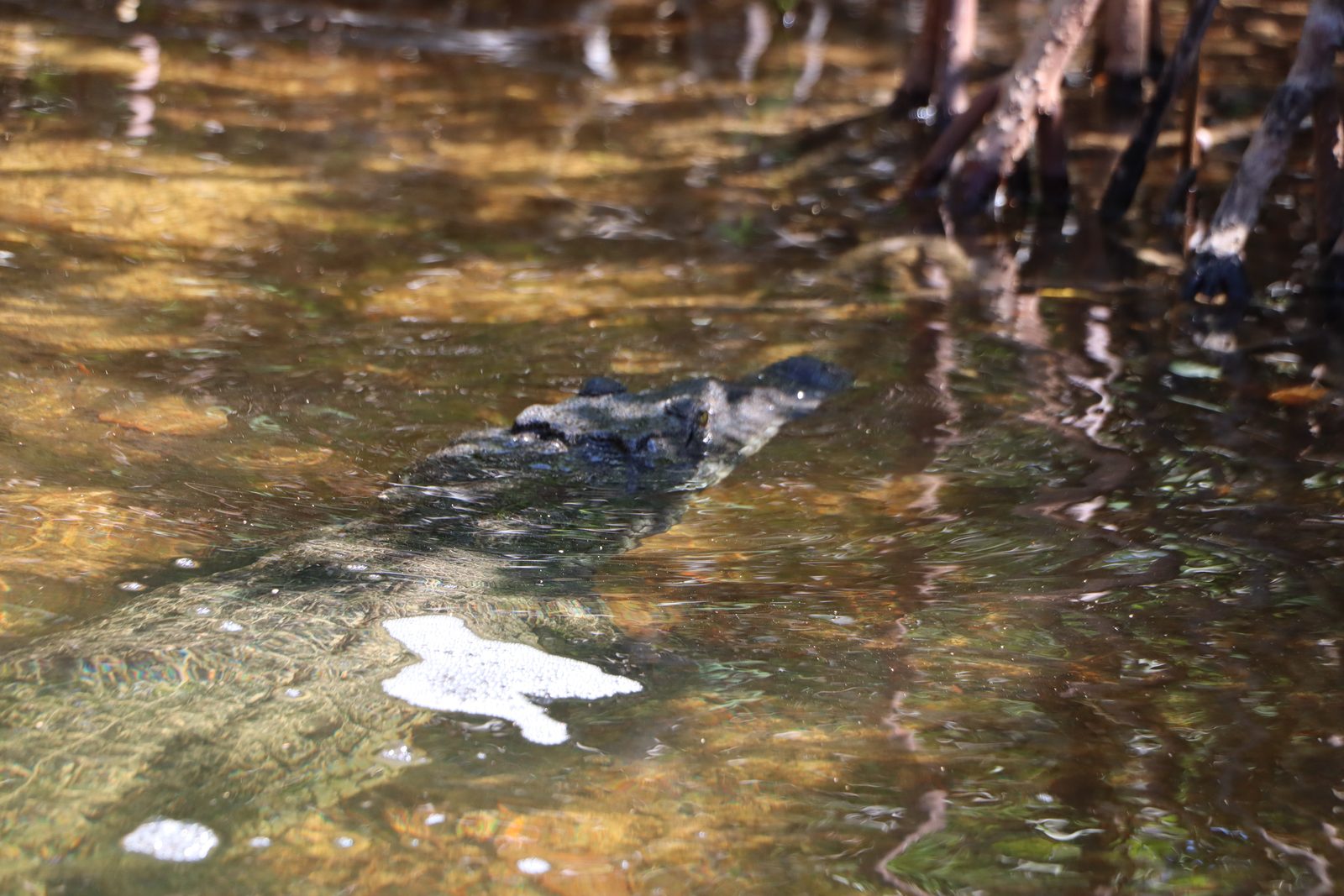
Two Species, Two Habitats
Morelet’s crocodile (Crocodylus moreletii) is the freshwater one — smaller, usually under 3 metres, found in the lagoons, marshes and mangrove channels. American crocodile (Crocodylus acutus) tolerates salt and lives toward the bays and coastal lagoons. Both were hunted to the edge in the twentieth century for their skins and have recovered inside protected areas like this one. Their presence is a conservation success story, not a hazard report.
Why the Canal Float Is Safe
The float and swim sections are specific, shallow, fast-moving stretches — not crocodile habitat. Crocodiles prefer still, deep, vegetated water with cover and quiet; the canal route is the opposite of that and has boat traffic all morning. Guides check the sections daily, and every group wears a life vest and stays together. In decades of operation the cooperative has had no incident. That is not luck: it is route selection and daily judgement by people who grew up reading this water.
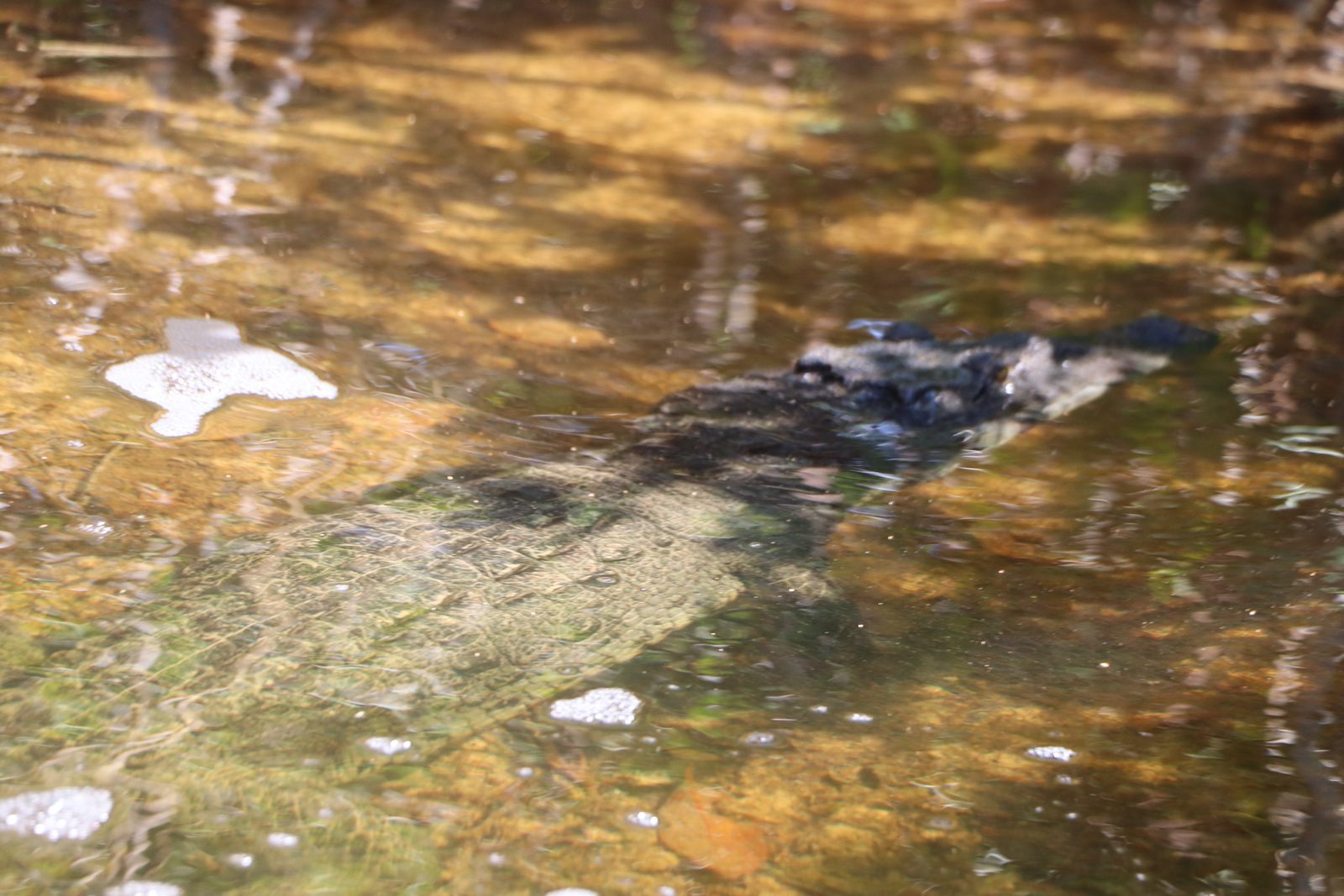
How to Behave If You See One
Stay in the boat. Stay calm — a crocodile holding still is not stalking you, it is thermoregulating. Never feed one, ever: a fed crocodile associates boats with food and becomes genuinely dangerous, which is how tragedies start elsewhere. Do not swim at dusk or dawn in unknown water. And take the photo from where you are; the zoom exists for this.
What They Do for the Ecosystem
Crocodiles are apex predators that regulate fish populations and, in the dry season, maintain deep pools that become refuges for everything else. Remove them and the wetland simplifies. They are also excellent indicators: a lagoon system healthy enough to support crocodiles is healthy enough to support the 345 bird species in our wildlife guide.
The Maya Read Them Differently
In Maya cosmology the crocodile is associated with the earth itself — one version of creation describes the world resting on the back of a great caiman floating in primordial water. The animal in the channel is not a monster in that worldview. It is closer to a landlord.
Where You Are Most Likely to See One
The quiet mangrove channels on the boat crossing, especially early morning and late afternoon, and always with a guide who knows which bends they favour. The Ancient Canal tour and the Bird Watching tour both pass good habitat — no promises, because that is not how wildlife works.
Meet the Community Behind the Tour
In just two minutes, discover who we are — the Maya families and cooperative members who make every experience authentic and regenerative:
Frequently Asked Questions
Are there crocodiles in Sian Ka’an?
Yes — Morelet’s crocodile in the freshwater lagoons and channels, and American crocodile toward the bays. Both are protected species recovering inside the reserve.
Is it safe to swim in the Sian Ka’an canal?
Yes. The float sections are shallow, moving water that crocodiles avoid, checked daily by guides, with life vests provided and groups kept together.
How big do the crocodiles get?
Morelet’s crocodile typically reaches 2–3 metres; American crocodiles can grow larger but are found in the coastal bays rather than the visitor routes.
What should I do if I see a crocodile?
Stay in the boat, stay calm, never feed it and photograph from a distance. Feeding is the single behaviour that turns a shy animal into a dangerous one.
Respect, Not Fear
Come see the reserve the way it actually is — crocodiles included, from exactly the right distance. Book your Sian Ka’an experience with the Maya cooperative.
Questions? Contact us at reservacionesctsk@siankaantours.com.mx or WhatsApp +52 984 114 0750