
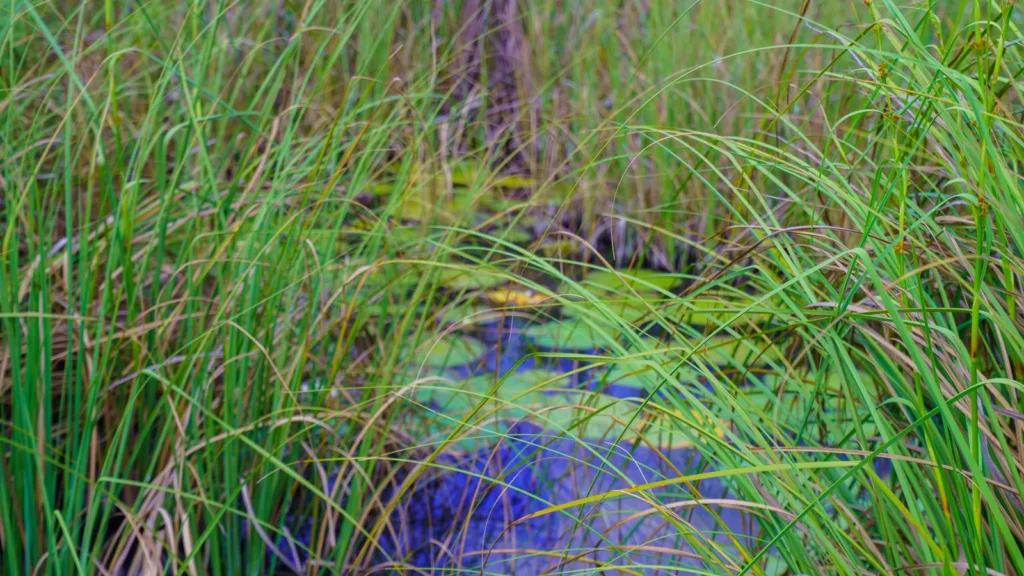
Most visitors floating down the ancient canal look at the water: it is so clear you can see every root and fish below. But our guides always remind them to look up as well. On the branches of the mangroves, small gardens are growing in the air: bromeliads and orchids.
What Are Epiphytes?
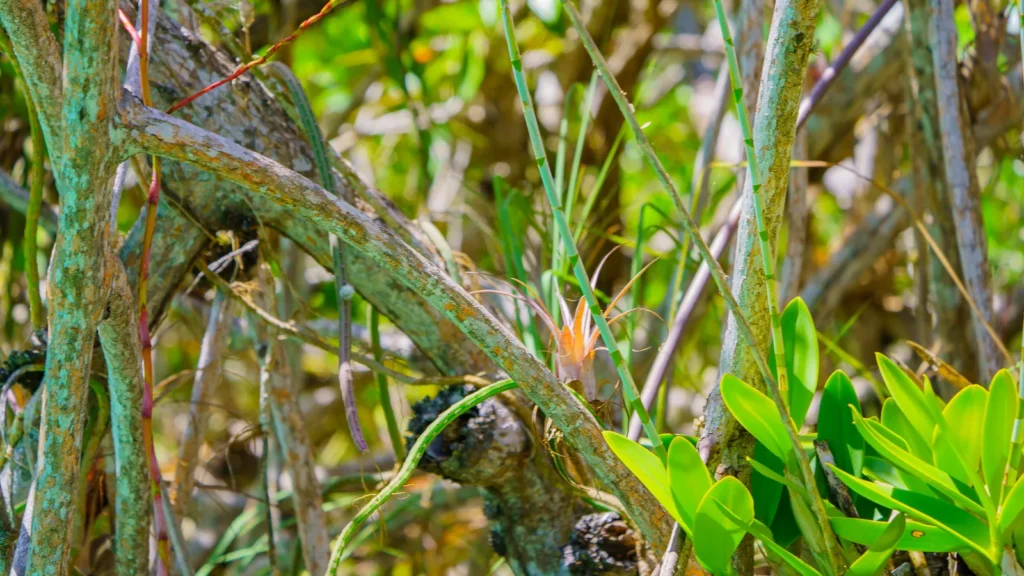
Bromeliads and many orchids are epiphytes: plants that grow on other plants without harming them. They do not take nutrients from the tree. Instead, they use it as a support to reach light and air, and they collect water and nutrients from rain, humidity and falling debris.
In a humid environment like the canal, where water is everywhere and sunlight filters through the canopy, epiphytes thrive. They cover branches, cling to trunks and sometimes form dense clusters.
Bromeliads: Tiny Water Tanks
Many bromeliads have leaves arranged in a rosette that forms a small cup. Rainwater collects in the centre, creating a tiny pool. These miniature tanks become homes for insects, frogs and other small creatures, and a drink for birds. A single bromeliad can host an entire community.
Some bromeliads, known as air plants, absorb moisture directly through fine scales on their leaves. You will see their silvery, twisted shapes along the mangroves.
Orchids of the Canal
Orchids are more discreet. Most of the year you notice only their thick leaves and roots wrapped around branches. When they bloom, small flowers appear in shades of white, yellow, purple or brown. The flowering season depends on the species, so each visit can bring a different surprise.
Orchids and bromeliads are protected in Mexico. In Sian Ka’an, of course, nothing is collected: we look, we photograph, and we leave everything as we found it.
Where to See Them
The best place to see these gardens is during the float in the 950-metre canal that starts at the Maya temple of Xlapak. As you drift slowly with the current, branches pass just over your head. Our guides point out the most interesting plants and explain their role in the ecosystem.
The float is part of the Ancient Canal Tour, the Muyil Sacred Mayan Immersion and the afternoon Sacred Caribbean Paradise. Kayakers on our kayak tour also see them along the mangrove channels. Read what the float feels like in floating the ancient canal, minute by minute.
Why They Matter
Epiphytes are a sign of a healthy, humid forest with clean air. They increase biodiversity by offering shelter, water and food to many small animals. When you float beneath them, you are passing through one of the richest layers of the Sian Ka’an ecosystem, one most people never notice.
Meet the Maya Cooperative Behind Your Visit
Frequently Asked Questions
What plants grow on the trees in the Sian Ka’an canal?
Mostly epiphytes such as bromeliads and orchids, which grow on mangrove branches without harming the trees.
Can you see orchids in bloom in Sian Ka’an?
Yes, depending on the season and the species. Most of the year you will see their leaves and roots on the branches.
Which tour lets me see the bromeliads of the canal?
The float in the 950-metre canal, included in the Ancient Canal Tour, the Muyil Sacred Mayan Immersion and the Sacred Caribbean Paradise.
Questions? Contact us at reservacionesctsk@siankaantours.com.mx or WhatsApp +52 984 114 0750