
The first thing a good bird guide teaches you is not the name of a bird. It is how to stand still.
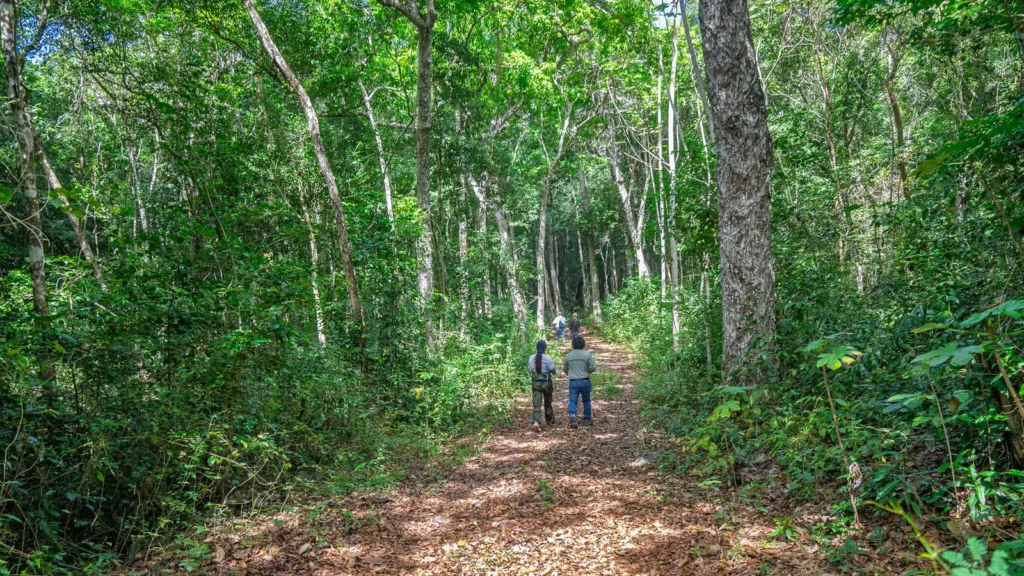
On the community trails of Chunyaxché, the morning starts quietly. Coffee at the palapa, a few words about the plan, and then a request that surprises many visitors: “Let’s walk in silence for a while.” Not because talking is forbidden, but because the jungle has a lot to say, and most of it is easy to miss.
Listening Before Looking
Experienced birders know that most birds are heard long before they are seen. Our guides know these forests well and can identify dozens of species by sound alone: the low hoot of a motmot, the rattling call of a woodpecker, the sharp chips of warblers moving through the leaves.
When you walk with them, they stop often. They tilt their head. They point, not at a bird, but at a direction. Then they wait. More often than not, a few seconds later, something moves and a bird appears exactly where they were looking.
Patience as a Skill
In a world of fast travel and full itineraries, a birdwatching walk asks you to slow down. You might stand under a tree for ten minutes. You might follow a call down the trail and lose it. That is part of the experience.
Our guides often say that birds reward patience, not speed. The visitors who enjoy the morning most are usually the ones who stop trying to see everything and start paying attention to what is around them.
Knowledge That Goes Beyond Birds
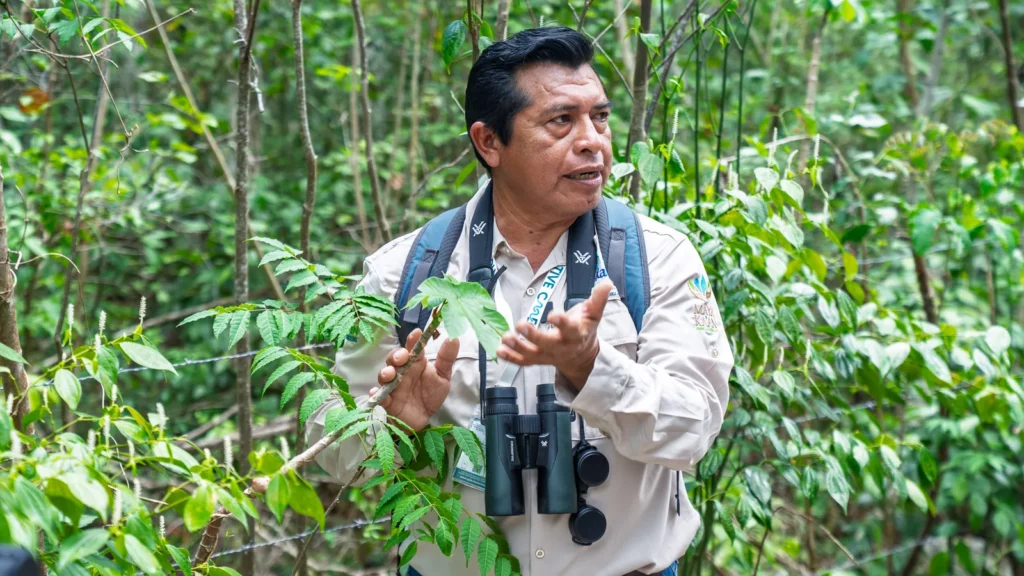
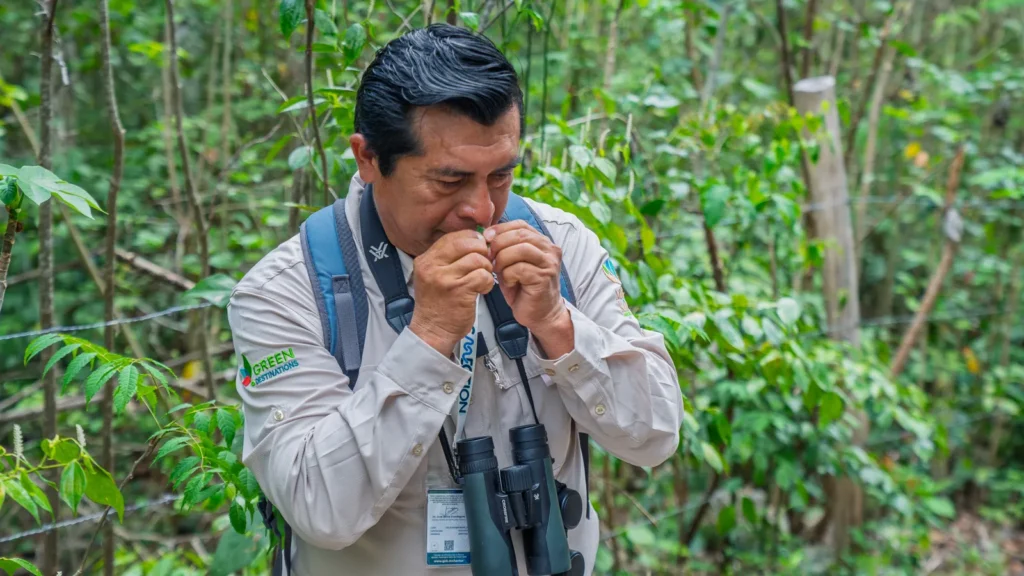
A good guide does not see a bird in isolation. They see the tree it feeds on, the fruit that brings it there in a certain season, the insect it hunts. Along the trail you will hear how native plants have been used for generations as medicine, food and part of rituals. A leaf crushed between the fingers releases a scent your guide remembers from childhood remedies.
That is why our experience is called Bird Watching & Mayan Herbal Medicine. The two belong together: understanding the forest means understanding how people have lived with it for centuries.
A Sacred Practice
For our cooperative, walking the jungle in silence is more than a technique. It is a form of respect. That is why this experience is recommended for visitors aged 12 and over: it asks for attention, contemplation and calm on uneven trails.
Near the end of the walk there is a moment set aside simply to listen. No pointing, no cameras. Just the sounds of the forest waking up. Many visitors tell us it was the part they remember most.
Practical Details
- Where: our palapa in Muyil, on Highway 307, about 25 km south of Tulum. You arrive on your own.
- When: at sunrise, between 6:00 and 7:00 depending on the season. We confirm your time when you book.
- Duration: about 5 hours, including coffee, the walk and a traditional Maya meal.
- Fee: the walk explores community trails, so the federal reserve fee does not apply.
- Binoculars: bring your own or request a pair when booking.
Curious about the season? Read when the migrants arrive in the Riviera Maya, or explore the region’s list in our guide to birdwatching in Sian Ka’an.
Meet the Maya Cooperative Behind Your Visit
Frequently Asked Questions
Is the bird watching tour inside the Sian Ka’an reserve?
No. It takes place on the community trails of Chunyaxché, also known as Muyil, at the gateway to Sian Ka’an. Because of that, the federal reserve access fee does not apply.
What languages do the bird guides speak?
Our guides lead the walk in Spanish, English or Maya, with prior confirmation.
Is transportation included?
No. This is a self-arrival experience at our palapa in Muyil, about 25 km south of Tulum on Highway 307.
Questions? Contact us at reservacionesctsk@siankaantours.com.mx or WhatsApp +52 984 114 0750