
The Maya built roads of white limestone that ran straight through swamp and jungle for kilometres — raised, plastered, and glowing under the moon. They called them sacbé: “white road.” Some connected cities a hundred kilometres apart. One of them ends at a lagoon inside Sian Ka’an, and you can still walk it.
What a Sacbé Actually Is
Not a dirt path. A sacbé is engineered: a raised bed of rubble and stone, faced with cut limestone and topped with sascab — powdered white lime that set almost like concrete. Widths ranged from two to twenty metres; some ran dead straight for over sixty kilometres. The Maya had no draft animals and no wheeled transport. These roads were built for people walking, and for everything they carried.
Why White?
Practicality and meaning at once. The pale surface stayed visible at night, which mattered in a culture that travelled in the cool hours and read the sky obsessively. And white — sac — carried associations with purity and the celestial. A sacbé was infrastructure and cosmology in the same object, which is very Maya.
The Famous Ones
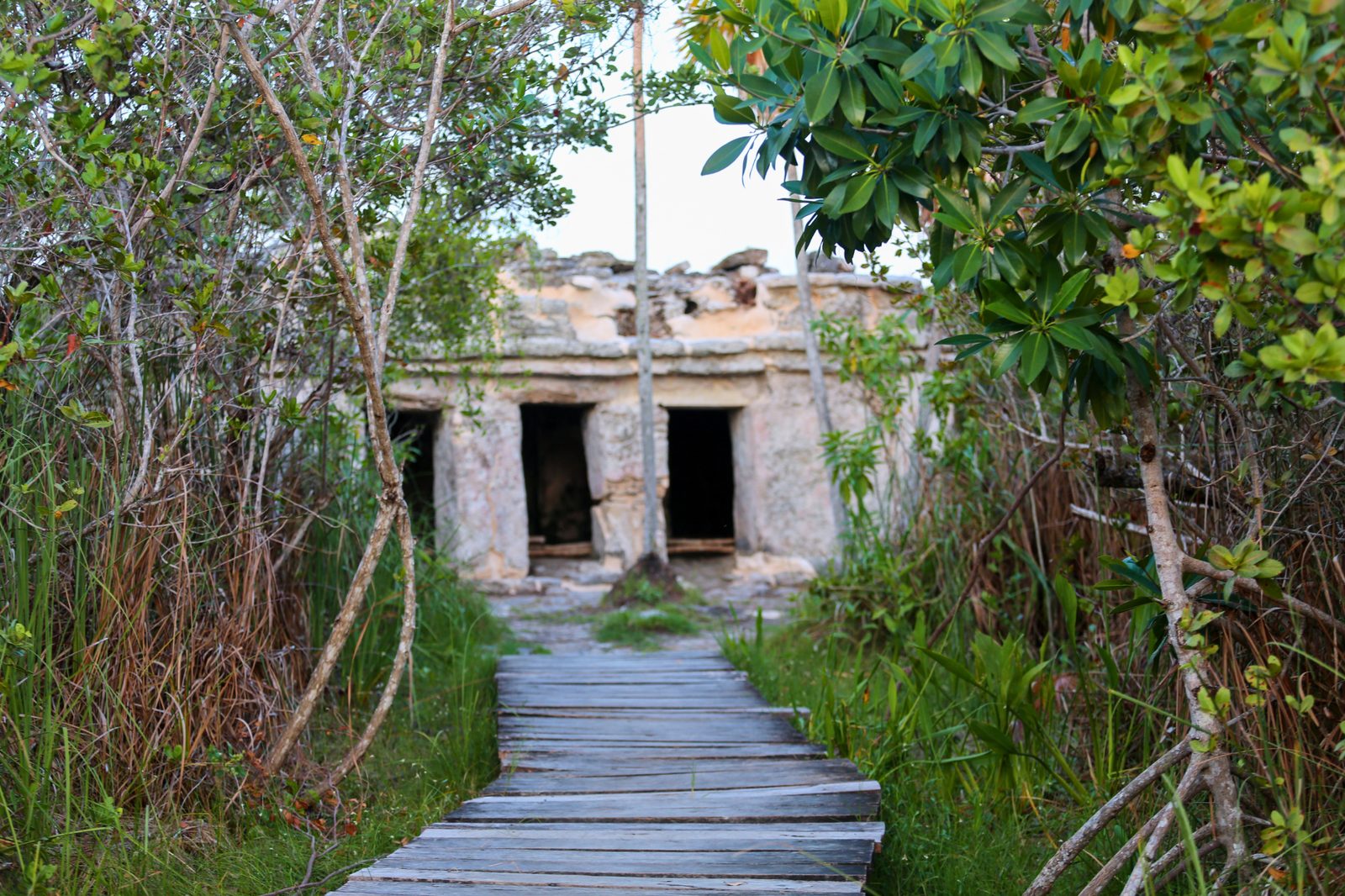
The longest known runs roughly 100 km from Cobá to Yaxuná, near Chichén Itzá — a political statement in stone as much as a trade route. Others radiate out of Cobá like spokes. At Muyil, a sacbé links the temple core to the lagoon, and the Sacbé Group excavated in 2026 opened part of that story to the public for the first time.
The Road That Becomes Water
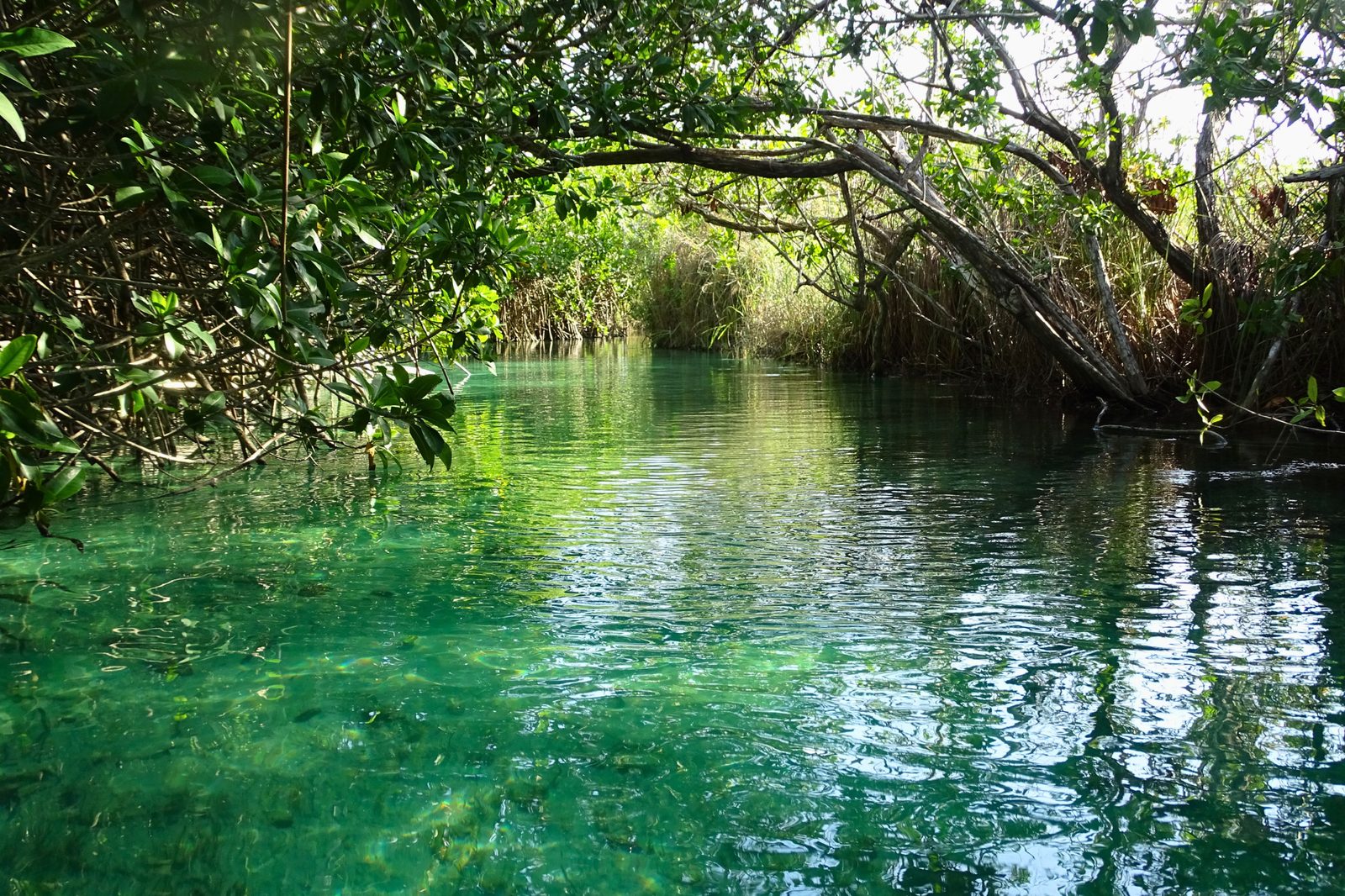
Here is what makes Muyil unusual. The white road runs to the water — and the water continues the journey. From the lagoon, a hand-dug canal carries you toward the sea. Road, canal, lagoon, bay, reef: one continuous transport system connecting the interior to the Caribbean. Cacao, jade, obsidian, salt and honey moved along it. You can float that same canal today on the Ancient Canal tour, which is not a re-enactment — it is the original route, still wet.
Who Walked Them
Traders, pilgrims, messengers, armies, brides. Roads like these are the reason a coastal port city like Muyil could exchange goods with cities deep inland, and why Maya society across the peninsula shared calendars, gods and design across enormous distances. Empires are held together by roads; the Maya just made theirs beautiful.
Walking One Today
At Muyil the sacbé section is short, shaded and easy — the interest is in what your guide points out: the fill technique, the drop to the swamp on either side, the shrine at the end. Come with a Maya guide from the community and the road stops being a raised line of stones and becomes a story about where everyone was going.
Meet the Community Behind the Tour
In just two minutes, discover who we are — the Maya families and cooperative members who make every experience authentic and regenerative:
Frequently Asked Questions
What is a sacbé?
A raised, paved Maya causeway made of stone rubble faced with limestone and topped with white lime plaster, used for travel, trade and ceremony between cities and sites.
How long is the longest sacbé?
The Cobá–Yaxuná causeway runs roughly 100 kilometres, the longest known Maya road, built without wheels or draft animals.
Can you walk a sacbé at Muyil?
Yes. A section connects the temple core toward the lagoon, and the newly excavated Sacbé Group opened to visitors in 2026 as part of the Muyil archaeological zone.
Why did the Maya build white roads?
The white lime surface was durable and visible at night, and the colour carried sacred associations. The roads served trade, pilgrimage and political connection at once.
Walk the Road, Then Float the Rest
At Muyil the ancient highway ends where the water begins — and you can follow both. Book the Muyil Sacred Mayan Immersion with the descendants of the people who built it.
Questions? Contact us at reservacionesctsk@siankaantours.com.mx or WhatsApp +52 984 114 0750